How To Cover Garage Walls For A Party: Innovative Ideas
Transform your space with my guide on How To Cover Garage Walls For A Party: Innovative Ideas for a memorable and unique celebration!
Garages are often the unsung heroes of home entertaining. When the weather turns sour or the guest list outgrows the living room, that large, open concrete box becomes the perfect backup plan. However, transforming a space designed for oil changes and lawnmowers into an elegant party venue presents a unique set of challenges. The industrial lighting is harsh, the acoustics are echoey, and staring at exposed studs or shelves of paint cans doesn’t exactly scream “celebration.”
The key to a successful garage transformation lies in masking the utilitarian nature of the room while maintaining safety and functionality. In my years of designing event spaces in residential homes, I have found that covering the walls is the single most effective way to change the atmosphere. It instantly softens the acoustics, hides the clutter, and provides a canvas for your theme.
Whether you are hosting a graduation party, a wedding reception, or a casual neighborhood mixer, you need solutions that are temporary yet sturdy. If you are looking for visual inspiration, check out the Picture Gallery at the end of the blog post.
I.Option 1: The Soft Approach with Pipe and Drape
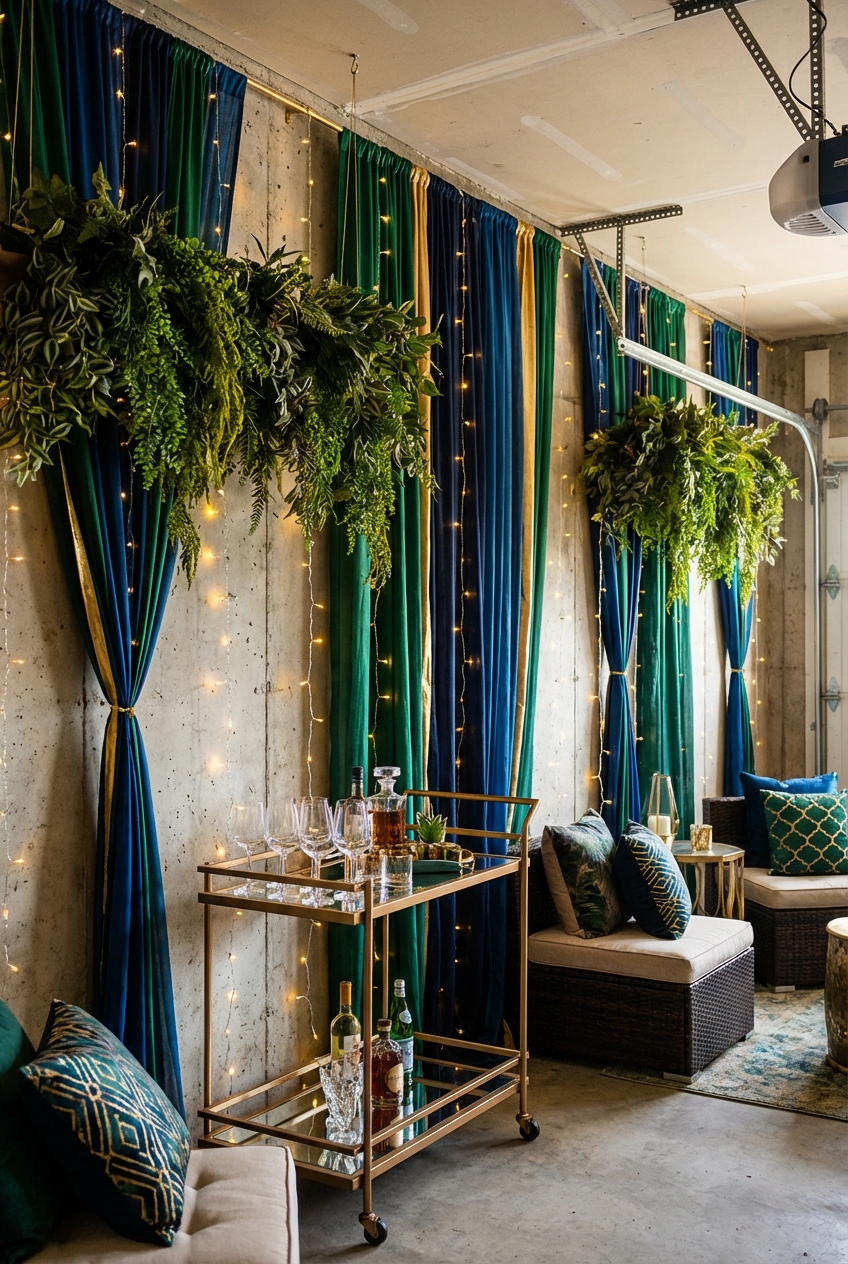
The most professional and effective way to cover garage walls is using a pipe and drape system. This is the industry standard for events because it is free-standing. You do not need to drill into concrete or risk damaging drywall.
A pipe and drape system consists of heavy steel base plates, vertical uprights, and horizontal crossbars. You slide the fabric onto the crossbar and lift it up. In a standard two-car garage, you can create a completely new room inside the existing shell.
Choosing the Right Fabric
The type of fabric you choose dictates the mood. For a romantic or upscale look, I always recommend sheer voile or chiffon. It allows a bit of light to pass through but blurs the messy shelves behind it. If you need to completely block out ugly storage racks or tools, you need a thicker material like Banjo cloth or Premier.
Measurements and Fullness
One of the biggest mistakes DIYers make is not buying enough fabric. In interior design, we talk about “fullness.” Flat fabric looks like a bedsheet tacked to a wall. You want ripples and pleats.
- 50% Fullness: This is the bare minimum. If your wall is 10 feet wide, you need 15 feet of fabric width.
- 100% Fullness: This is the standard luxurious look. If your wall is 10 feet wide, you need 20 feet of fabric width.
Pro-Tip: Lighting Behind the Drapes
If you use sheer white fabric, place LED uplights between the garage wall and the fabric. This creates a stunning, glowing perimeter that makes the room feel larger and much more expensive.
II.Option 2: Faux Greenery and Living Walls
Bringing the outdoors in is a fantastic way to neutralize the “garage” feel. Greenery panels are incredibly popular for weddings and garden parties. They add texture and life to a cold, concrete space.
You can purchase 20-inch by 20-inch boxwood panels that snap together. These are durable, realistic, and reusable. Because covering an entire garage in boxwood can be expensive, I recommend using this as a focal point wall—usually behind the buffet or the photo booth area.
Installation for Renters
If you cannot staple into the walls, build a simple frame using PVC pipe or wood lattice. Zip-tie the greenery panels to the frame and lean it against the wall.
III.Option 3: The Industrial Chic Approach with Kraft Paper
If you are on a tight budget or aiming for a rustic, artistic vibe, rolls of brown Kraft paper or butcher paper are an innovative solution. This works exceptionally well for kids’ parties or art-themed gatherings.
You can hang the rolls horizontally, overlapping them like shiplap siding, or vertically like stripes. To elevate the look, use a chalk marker to draw oversized floral patterns, write the menu, or create a guestbook wall where guests can leave messages.
Layering for Depth
Paper on its own can look flat. Layering is essential here. I suggest creating a “fringe wall” using streamers or cut paper in front of the solid Kraft paper background. This adds movement when the garage door is open and the breeze comes in.
- Step 1: Cover the ugly shelving with solid Kraft paper.
- Step 2: Cut 10-foot lengths of crepe paper or ribbon.
- Step 3: Tape them at the ceiling line, spacing them 1 inch apart.
IV.Option 4: Scenic Flats and Foam Board Insulation
For a clean, architectural look, we can borrow a technique from theater set design: scenic flats. If you have open stud walls (unfinished garage), this is actually very easy.
You can buy 4×8 sheets of rigid foam insulation or thin plywood. These fit perfectly over standard studs. You can paint these panels beforehand or cover them in wallpaper.
Why This Works for Garages
Garages often have protruding pipes or electrical boxes. Rigid panels can be cut to accommodate these obstacles more neatly than fabric, which tends to bulge awkwardly over hard objects.
Fastening Without Damage
If you are renting, use Command strips specifically designed for large picture frames to hold foam boards in place. They are surprisingly strong. For a more secure hold on wood studs, a few small finish nails will do the trick and are easily removed.
V.Option 5: Projection Mapping and Light Washes
Sometimes, the best way to cover a wall is to turn out the lights and project something else onto it. This is the “distraction” method.
If you paint the garage walls white or hang simple white sheets, you can use a projector to display moving patterns, landscapes, or abstract colors. This is dynamic and covers the entire surface area without needing physical materials.
The Ambient Light Rule
This only works if you can control the light. If your party is during the day with the garage door open, projections will wash out. This is strictly for evening events.
VI.Common Mistakes + Fixes
- MistakeIgnoring the Floor Covering the walls perfectly while leaving oil stains on the concrete creates a visual disconnect. It breaks the illusion.FixUse a large area rug or rent event carpet. If the budget is tight, buy a roll of remnant carpet. It creates a defined “living” zone.
- MistakeBlocking the Sensors Garage doors have safety sensors near the floor. If your drapes or decorations block these, the door might not close, or worse, it might reverse unexpectedly.FixTape the sensors over if the door will remain open, or ensure your decor stops 6 inches from the track.
- MistakeUnderestimating Height Standard interior curtains are 84 or 96 inches long. Garage ceilings are often higher or have open rafters.FixMeasure from the point of attachment, not the ceiling. I always buy 108-inch or 120-inch curtains and hem them with iron-on tape if necessary. It is better to have them pool on the floor than dazzle guests with “high-water” pants on your walls.
VII.What I’d Do in a Real Project: A Mini Checklist
If I were hired today to prep a garage for a client’s 40th birthday party, this is the exact workflow I would follow:
VIII.Final Checklist for Garage Wall Coverage
Before you start hanging your decor, run through this final punch list to ensure safety and success.
IX.Frequently Asked Questions
- Can I use the garage door tracks to hang things?
- Generally, yes, but be very careful. You can use “S” hooks or zip ties to hang lightweight items (like string lights or paper lanterns) from the metal support brackets on the ceiling. Never hang anything directly on the moving tracks, the springs, or the cables. The tension in garage door springs is dangerous. Keep all decor clear of moving parts.
- How do I heat or cool the garage once the walls are covered?
- If you cover the walls with fabric, you are actually adding a layer of insulation, which helps. However, you need to ensure airflow for portable heaters or AC units. Do not place a propane heater near your wall coverings. I recommend renting an industrial tube heater that sits outside and blows warm air in, or using electric radiant heaters placed in the center of the room.
- What is the cheapest way to cover garage walls?
- The absolute cheapest method is plastic tablecloths from the dollar store. However, this often looks “cheap.” A better budget-friendly option is plastic painters’ drop cloths. They are inexpensive, cover huge areas, and have a translucent, frosted look that catches light beautifully. When bunched together, they look like intentional design rather than a cover-up.
- How do I hide the garage door itself?
- The garage door is the hardest wall to cover because it needs to move. If the door will stay closed, treat it like any other wall. If it needs to open, I recommend stopping your wall covering at the edge of the tracks and decorating the door separately with lightweight magnets or decals that can move with the panels.
X.Conclusion
Transforming a garage requires looking past the grease stains and seeing the potential for volume and structure. By effectively covering the walls, you change the acoustic and visual baseline of the room. It stops feeling like a storage unit and starts feeling like a private venue.
Remember that the goal isn’t to make it look exactly like a living room—it’s to create a comfortable, safe, and festive environment. Whether you choose the softness of drapes, the vibrancy of greenery, or the creativity of paper structures, the effort you put into the walls will have the highest return on investment for the overall vibe of your party.
XI.Picture Gallery
Five photographs · drag or swipe